

Diagnosed with Osteoporosis?
The right kind of exercise can help you manage it.
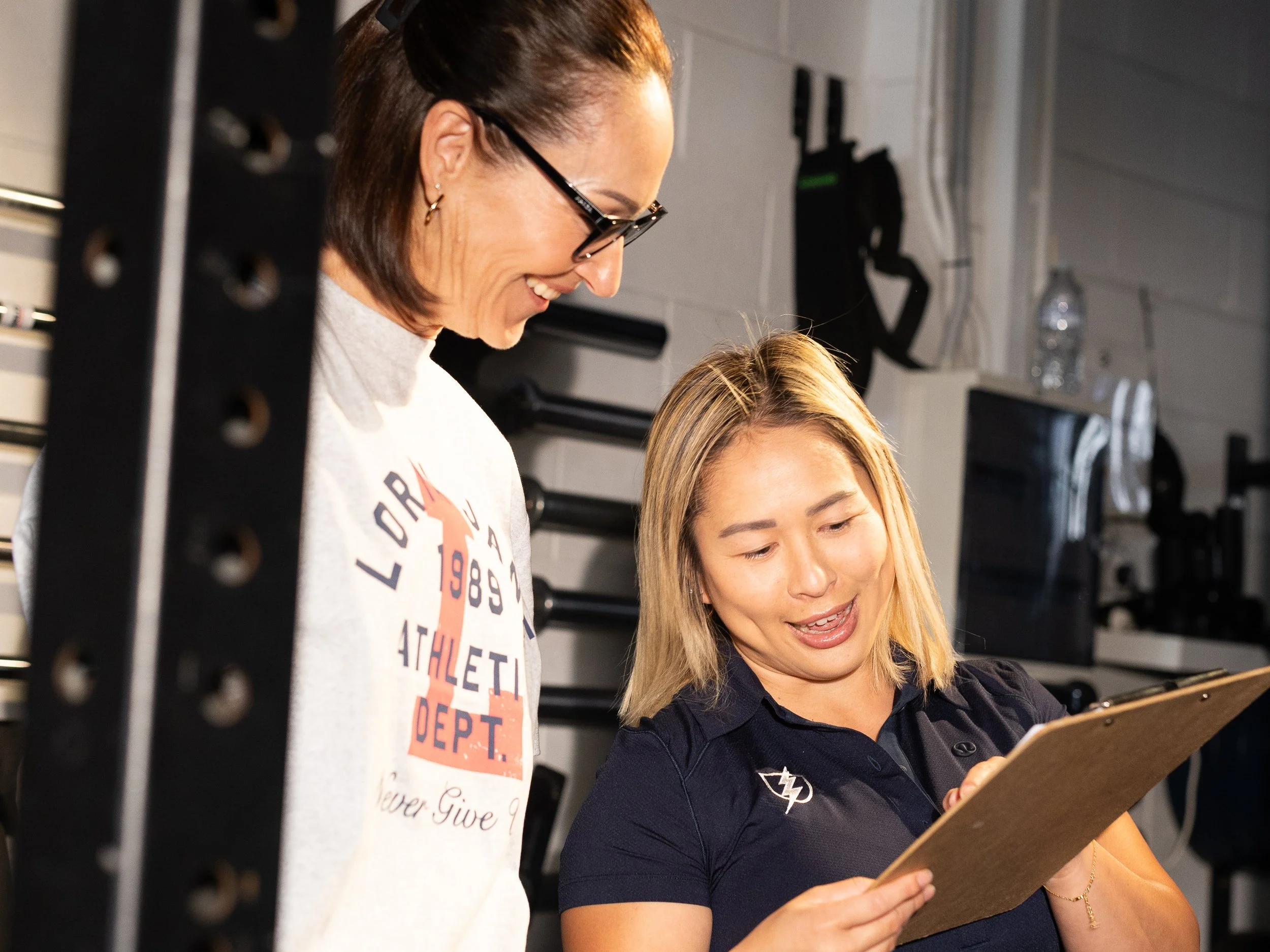
Accredited exercise physiologists in Newstead, working alongside your GP to build strength, balance and confidence. Safely and under supervision.
Download the free guide.
"The First 30 Days:
Managing Osteoporosis
With Movement"

Many patients access up to 5 subsidised visits a year through a Medicare chronic condition management plan from their GP, and private health extras may cover more. We'll help you work out what applies to you.
Prefer to talk first? Book a free 30-minute consult
with one of our exercise physiologists.
No cost, no obligation.

A diagnosis of osteoporosis or low bone density can feel unsettling, but it doesn't mean you should stop moving. In fact, well-structured, supervised exercise is one of the most effective non-medication ways to help maintain bone strength, improve balance and reduce falls risk, alongside the care your GP provides. The key word is supervised.
An accredited exercise physiologist (AEP) is a university-qualified health professional who designs safe, individualised programs for people with medical conditions, so you can load your bones the right way, without guesswork.
1. Strength training that's built for bone
The bones respond to being loaded. Supervised progressive resistance training, done at the right intensity for you, has been shown in postmenopausal women with low bone mass to improve bone mineral density at the spine and hip, while highly supervised programs recorded very few adverse events.¹ We apply that evidence carefully, at a pace that suits your body.
2. Balance and falls prevention
For many people with osteoporosis, a fracture happens because of a fall, not just because of the bone. That's why we pair strength work with challenging balance training, which current reviews support as an effective way to help prevent falls.² Fewer falls means less fracture risk.
3. A team approach, not a solo effort
We don't work in isolation. Your program is designed to sit alongside your GP, your specialist and any medication or supplements you're prescribed. One coordinated plan, not competing advice.

What happens at your free consult
Your first 30-minute consult is a conversation, not a workout. We'll talk through your diagnosis, your history, any fractures or concerns, and what you'd like to be able to keep doing. Then explain how a supervised program could work for you and how the funded pathway applies. There's no pressure and no obligation to continue.
FAQs
Is it safe to exercise with osteoporosis?
For most people, yes. When it's supervised and matched to your bone health. Under supervised conditions, structured resistance and balance programs for people with low bone mass have been well-tolerated with few adverse events reported.¹ We screen carefully first, avoid movements that aren't appropriate for you, and progress gradually. Always follow your doctor's advice, and tell us about any fractures or symptoms so we can keep your program safe.
Is it covered?
In many cases, yes. Patients with osteoporosis on a Medicare chronic-condition management plan can access up to 5 subsidised allied-health visits per calendar year (shared across all allied health), and private health extras may cover further visits. Ask your GP whether a chronic-condition management plan is right for you. We'll help you understand what applies before you commit to anything.
Do I need a referral?
Not to book your free consult. You can arrange that directly with us. You will need a referral from your GP to access the Medicare-subsidised visits, and we'll show you exactly how to ask for one.
What actually happens at a consult?
A 30-minute conversation with an accredited exercise physiologist: your history, your goals, and a clear explanation of how a supervised program and the funded pathway could work for you. No workout, no obligation.
You don't have to work out how to start on your own. Download the free guide or book your free 30-minute consult and take the first step with people who do this every day.
Privacy statement
When you download our guide or book a consult, we collect your name, contact details and any health information you choose to share so we can respond to you and prepare for your consult. This information is stored securely, is only used to provide and coordinate your care, and is never used for unrelated marketing without your consent. You can ask us to access or delete your information at any time. See our full Privacy Policy at zarathletica.com.au/privacy.
Safety note
Exercise is a valuable part of managing osteoporosis, but everyone responds differently and it works best as part of the plan your GP and care team set for you. This page is general information, not medical advice. Always follow your doctor's advice and seek their guidance before starting a new exercise program.
Evidence references
Watson SL et al. High-Intensity Resistance and Impact Training Improves Bone Mineral Density and Physical Function in Postmenopausal Women With Osteopenia and Osteoporosis: The LIFTMOR Randomized Controlled Trial. J Bone Miner Res. 2019.
DOI: 10.1002/jbmr.3284
Kumar S et al. Exercise for Postmenopausal Bone Health — Can We Raise the Bar? Current Osteoporosis Reports.2025.
DOI: 10.1007/s11914-025-00912-7