

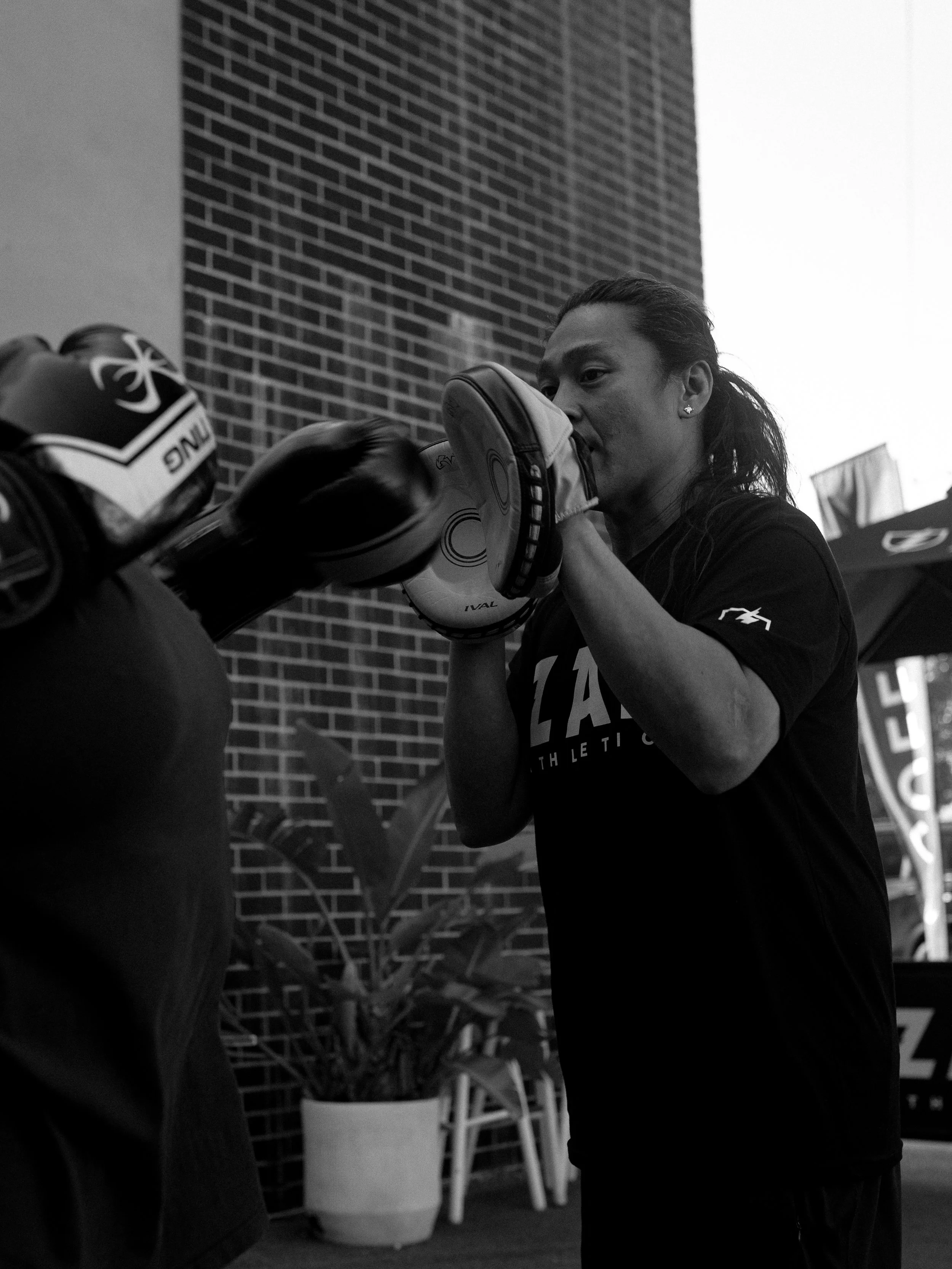
A small Australian trial found people stuck with boxing where they quit walking. The reason matters more than the workout.
A 2015 pilot study published in BMC Sports Science, Medicine & Rehabilitation enrolled healthy adult office workers and randomly assigned them to two 12-week programs matched for total training time. One group did non-contact recreational boxing. The other did brisk walking.
The body composition and fitness changes favoured the boxing group, but the more interesting finding sat in the attendance data. The boxing group recorded 79% session attendance across the 12 weeks. The walking group recorded 55%. Nobody in the boxing group dropped out.
The reason is the part worth keeping.
A skill-based session demands attention. You're learning a combination: reading the angle of a target, getting your feet right, and working out where the weight should be. That holds the mind in a way plodding cardio doesn't. The session ends, and you've made a small amount of progress on something specific. You come back the following week to make a little more.
A walk doesn't ask that of you. You're either doing it, or you're not. The attention is somewhere else, usually on a phone, and the session is forgettable the moment it ends.
The fair caveat: this was a small pilot. The numbers shouldn't be treated as definitive. But the pattern is the part that holds. Training you'll actually keep doing produces better outcomes than training you abandon, and the variables that drive long-term adherence are about attention, progression, and meaning rather than calorie burn.
The best training program is the one you'll still be doing in a year.
ReferenceCheema BS et al. Effect of an office worker-based recreational boxing programme on body composition and physical fitness: A pilot study. BMC Sports Science, Medicine & Rehabilitation, 2015. DOI: 10.1186/2052-1847-7-3